What Not to Bring on Your First Camping Trip
Packing for your first camping trip is exciting, but it is also where most beginners go wrong. There is so much advice out there about what to bring that almost nobody talks about what to leave behind, and that is usually the bigger problem.
Most new campers end up hauling a car full of gear they never touch, while the few things that actually matter get buried at the bottom of the bag under items that never leave the trunk.
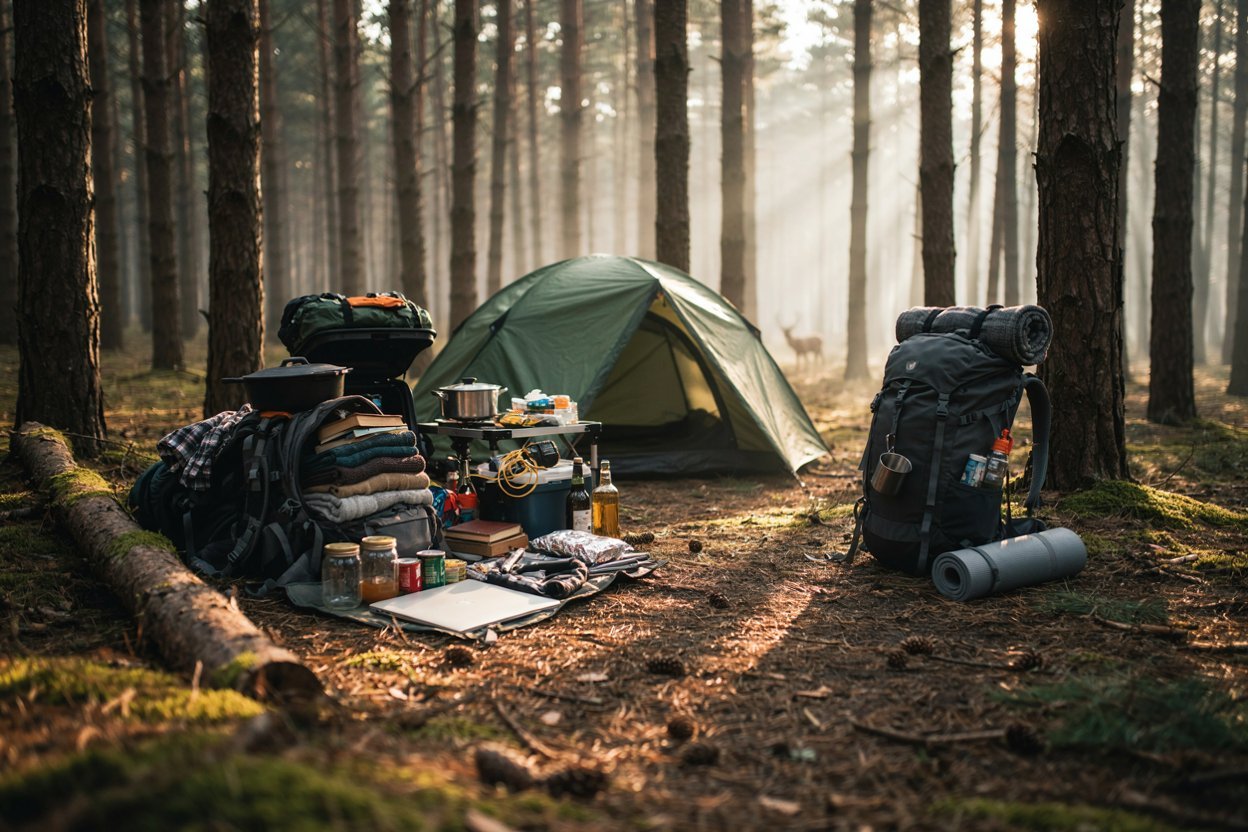
Overpacking does more than waste space. It makes your pack heavier, it slows you down when you are setting up camp, it gives you more to keep track of, and it often means you spend your trip managing gear instead of enjoying the outdoors.
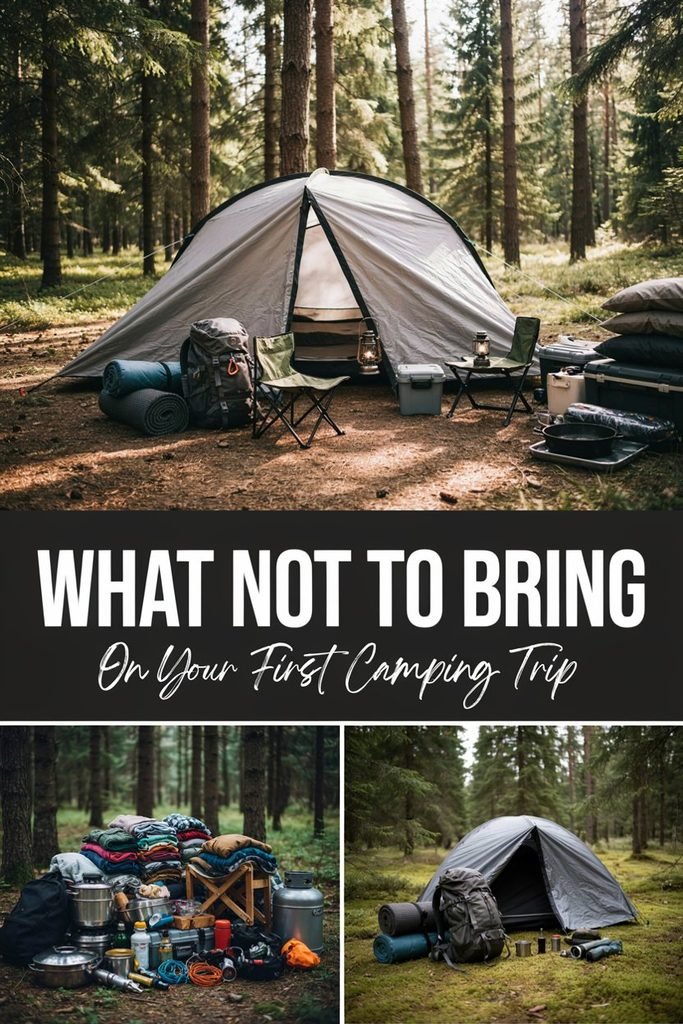
The goal of this guide is simple. Walk through the most common items new campers bring that they should not, explain why each one causes problems, and suggest what to bring instead.
If you are still working out the basics beyond packing, our beginner camping guide is a good place to start before you fill your bag. Once you have read through this list, you will have a much clearer idea of what actually belongs in your pack and what is better off staying at home.
Heavy Cast Iron Cookware
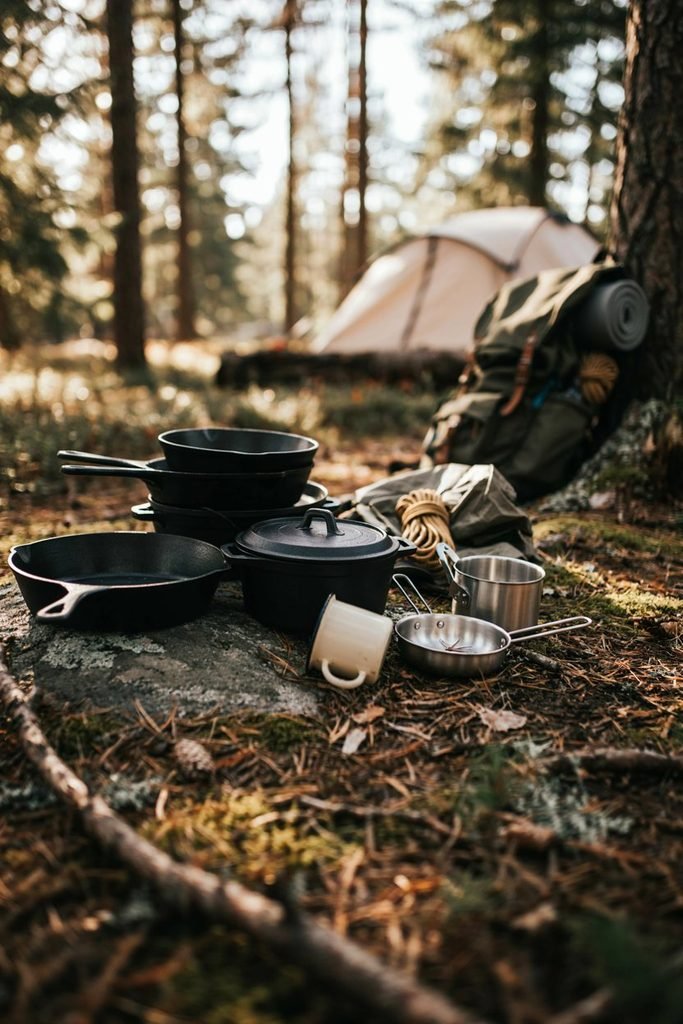
A full cast iron set feels like the real camper choice. It looks great in photos and it is genuinely useful once you know how to use it outdoors, but it is one of the worst things a beginner can pack.
A single cast iron skillet can weigh several pounds on its own, and most sets come with two or three pieces plus a lid. That adds a surprising amount of weight to a bag that already needs to carry a tent, a sleeping bag, and food.
Cast iron is also slow to heat, uneven on a camp stove flame, and it needs to be seasoned and dried properly after every use or it will rust.
Cleaning it without running water usually means scraping it out with sand or salt and wiping it down with oil, which is an extra step most first time campers are not prepared for and do not want to deal with at the end of a long day.
For a first trip, a single lightweight pot, a compact frying pan, or an all in one camping stove kit will cover everything you actually need to cook.
These pack down small, heat quickly, and clean up with a quick rinse. Save the cast iron for once you know your cooking setup and have a car camping trip where weight is less of a concern.
Too Many Clothes
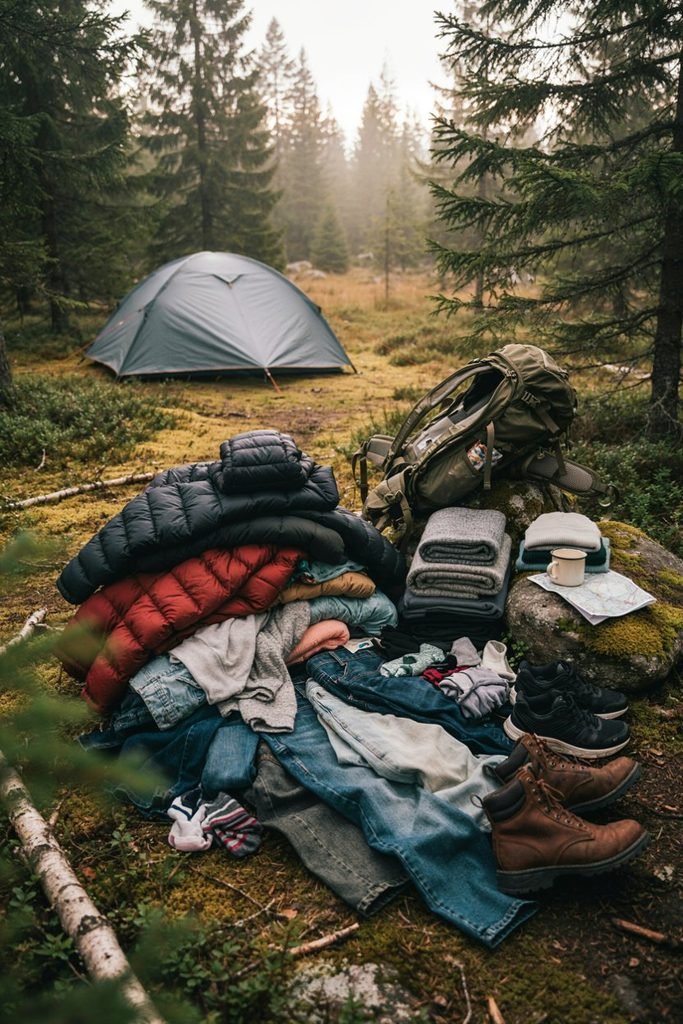
New campers often pack like they are going away for two weeks instead of two or three days. A full change of clothes for every single day, multiple pairs of shoes, and a backup outfit for every activity you might do all sound reasonable when you are packing at home, but on the trail or at the campsite that extra fabric just becomes dead weight.
The better approach is to think in layers rather than outfits. You need a base layer that manages sweat, a warm mid layer such as a fleece or light jacket, and a waterproof outer layer in case of rain or wind.
These three layers can be mixed and matched to handle almost any weather change, which matters far more outdoors than having a fresh shirt every day.
A realistic packing list looks something like two or three pairs of socks and underwear, one extra base layer, one warm layer, one waterproof layer, a hat, and the outfit you are already wearing.
Reuse pants and outer layers across multiple days. Nobody at a campsite is judging you for wearing the same jacket twice, and laundry can always wait until you get home. The weight and space you save can go toward food, water, or safety gear instead.
Bulky Books or Multiple Entertainment Devices
It is tempting to pack for boredom. New campers often bring a stack of paperbacks, a tablet loaded with shows, a handheld game console, and a speaker, all just in case there is downtime to fill.
In practice, camping rarely leaves you with as much idle time as you expect, and when it does, most people end up talking around the fire, watching the sky, or simply relaxing rather than reaching for a screen.
Camping is also one of the few chances most people get to actually disconnect, and that is part of the appeal for a lot of first time campers even if they do not realize it going in. Bringing a pile of entertainment options undercuts that and adds weight and bulk for something you likely will not use much.
If you want something to do during quiet moments, pick one lightweight option. A single paperback, a small deck of cards, or a travel sized game is plenty. Save the multi device entertainment setup for a car camping trip where weight does not matter and you have a specific reason to want it, like camping with young kids who need distractions.
Glass Containers
Glass jars, bottles, and containers might seem harmless to toss in a cooler, but they cause more problems outdoors than most beginners expect. Glass is heavy compared to plastic or metal, it takes up awkward space in a cooler or bag, and it breaks easily when it gets knocked around during a hike or bumped in a packed car.
A broken jar at a campsite is more than an inconvenience. Shattered glass mixed into dirt, grass, or sand is difficult to fully clean up, and it can be dangerous for you, for other campers who use the site after you, and for wildlife that may wander through later. Many campgrounds and backcountry areas discourage or outright ban glass for exactly this reason.
Stick to reusable plastic or metal containers, collapsible silicone containers, or resealable bags for food and drinks. They pack down flatter, they weigh less, and if something does spill or break, cleanup is far simpler.
Scented Products
Strong perfumes, scented lotions, heavily fragranced deodorant, and scented soaps feel like small comforts to bring along, but they can actually work against you outdoors. Fragrances attract insects, particularly mosquitoes and bees, which is the last thing you want when you are trying to relax at a campsite or fall asleep in a tent.
Depending on where you are camping, strong scents can also draw the attention of larger animals. In bear country especially, anything with a noticeable smell, from lotion to toothpaste to deodorant, should be treated with the same caution as food and stored accordingly. Even outside bear territory, unfamiliar scents can attract raccoons, rodents, and other wildlife looking for an easy meal.
Where possible, pack unscented or lightly scented toiletries. Unscented sunscreen, soap, and deodorant exist and work just as well as their fragranced counterparts. It is a small swap that can meaningfully cut down on unwanted insect and animal encounters during your trip.
A Tent You Have Never Set Up Before
This is not about an item to leave home, but it is one of the most common mistakes new campers make, so it belongs on this list. Do not let opening night at the campsite be the first time you pitch your tent. Trying to figure out an unfamiliar tent for the first time while daylight is fading, the wind is picking up, and everyone is tired from the drive is a frustrating way to start a trip.
Set the tent up at home first, ideally in your yard or even a living room if space allows. Learn how the poles connect, how the rainfly attaches, and how the stakes and guy lines work together to keep it stable. Time yourself if you can. Knowing roughly how long setup takes helps you plan your arrival so you are not racing against sunset.
It is also worth packing a small repair kit with spare stakes, a bit of extra cord, and a strip of repair tape, since a bent stake or a small tear is common on a first trip and easy to fix if you are prepared. Our guide on how to set up a tent walks through the full process step by step and can save you a frustrating first night in the field.
Excess Electronics
It is easy to justify bringing along a portable speaker, a second phone charger, a camera with multiple lenses, a laptop, or other gadgets that feel useful in daily life. Outdoors, each one adds weight, takes up space, and gives you one more expensive item to worry about protecting from rain, dirt, and drops.
Electronics also depend on power, and most first time camping spots do not have an outlet nearby. Bringing more devices usually just means bringing more chargers and battery packs to keep them running, which adds even more weight for gear you may only use for a few minutes at a time.
A phone, a reliable headlamp, and a single portable battery pack are usually all you need. The phone covers communication, navigation, and photos. The headlamp keeps your hands free after dark, which matters more than people expect on a first trip. The battery pack keeps both charged without needing an outlet. If you want to bring a camera for better photos, one simple camera is enough. Leave the rest of the gadget bag at home.
Valuables You Would Hate to Lose
Campsites are outdoor and often shared spaces, whether that means a busy campground with neighbors nearby or a backcountry site with no one around to keep an eye on your things while you hike. Either way, there is more risk of losing something, damaging it, or having it go missing than there is at home.
Expensive jewelry, watches, and other sentimental valuables are especially risky. They can slip off during activities, get buried in dirt or sand, or fall out of a pocket on the trail without you noticing until it is too late. Wallets full of cards you do not need and important original documents fall into the same category. Bring a card and some cash in a secure spot, but leave the rest locked away at home.
A simple rule of thumb works well here. If losing an item would genuinely ruin your trip or upset you for weeks afterward, it does not belong in your camping pack. Take a photo of anything you would normally carry for identification purposes instead of bringing the physical item if possible.
Too Much Food
New campers often overpack food out of a fear of running out, but this usually backfires. Extra food means extra weight, more items that need to stay cool or protected from animals, and more waste to pack out at the end of the trip. Perishable food that is not eaten in time also becomes a spoilage and smell risk, which circles back to the same wildlife concerns mentioned earlier with scented products.
A better approach is to plan meals in advance based on the exact number of days and people on the trip, then pack slightly more than needed rather than significantly more. Simple, calorie dense, low mess meals tend to work best for beginners.
Avoid bringing an entire pantry of snack options just in case, and skip anything that requires extensive prep or cleanup on a first trip. You can always adjust your food planning once you have more experience and know your own appetite and habits in the outdoors.
Bulky Furniture and Comfort Items
Folding camp chairs, full size pillows, air mattresses, and portable tables can make a campsite feel like home, but they take up a surprising amount of trunk and pack space and are usually unnecessary on a first trip, especially if you are hiking any distance to your site.
These items make far more sense for car camping trips where you can park right next to your site, but they are a poor fit for a first outing where you are still learning what you actually need.
If comfort is a priority, look for compact, lightweight versions of these items rather than the bulky standard versions. A small inflatable pillow or a compact folding stool takes up a fraction of the space and weight while still giving you a bit more comfort than sitting directly on the ground.
Frequently Asked Questions
What is the biggest packing mistake first time campers make?
Overpacking. Most beginners bring far more clothing, cookware, and comfort items than they actually need, which adds weight and makes the whole trip harder to manage. Packing light and layering is almost always the better approach.
Is it okay to bring cast iron cookware camping?
It is fine for car camping once you have more experience, but for a first trip it is usually too heavy and too much of a hassle to clean without running water. A single lightweight pot or a compact stove kit is a better starting point.
Why should I avoid scented products while camping?
Fragrances from lotion, soap, and deodorant can attract insects and, in some areas, larger wildlife. Unscented toiletries lower the chances of unwanted animal encounters at your site.
Should I bring glass containers on a camping trip?
It is best to avoid them. Glass is heavy, breaks easily, and creates a real cleanup hazard if it shatters at a campsite. Reusable plastic or metal containers are lighter and safer.
How many clothes should I actually pack?
Plan around layers rather than daily outfits. A base layer, a warm layer, and a waterproof layer can be mixed and matched across several days, so you rarely need more than two or three changes of socks and underwear plus one backup layer.
Do I need to bring entertainment like books or a tablet?
Not much. Most people spend downtime around the fire or simply relaxing rather than reaching for entertainment. One small book or a deck of cards is usually enough.
Should I practice setting up my tent before the trip?
Yes. Set it up at home first so you understand the poles, stakes, and rainfly before you are relying on it at the campsite, especially if you will be setting up as it gets dark.
Is it necessary to bring folding furniture like chairs or tables?
Not for a first trip, especially if you are hiking any distance to your site. These items are better suited for car camping where weight and space are less of a concern.
Final Thought
The best camping trips are usually the simplest ones. Every item you decide not to bring is one less thing to carry, one less thing to worry about losing, and one less thing standing between you and actually enjoying your time outdoors. Once you know what to skip, it becomes much easier to focus on what actually makes a trip enjoyable, whether that is a good night of sleep, a quiet morning by the fire, or simply not being weighed down by gear you never needed in the first place.
As you plan your packing list, go through your gear one more time and ask whether each item truly earns its space and weight. If something falls into one of the categories above, leave it behind and trust that you will not miss it. For a rundown of the essentials that are actually worth packing instead, check out our post on things you will be glad you packed on every trip.